Wanting to provide an exciting learning environment for children, Northside Montessori School was lovingly founded in 1986. Based on a community of dedicated teachers, involved parents and cost-effective tuition, we embraced Maria Montessoriʼs philosophy of learning which meets each child where they are. Children are always our first priority, and we offer flexible schedules to nurture their minds. We know that their educational journey is just beginning when they leave our school. We help them develop a natural love of learning with a never ending curiosity, leading to their future success as kind and caring adults.
Why Montessori
Traditional vs Montessori
Montessori
Goal - Foster a Love of Learning
Multi-age grouping
Reality
Child directed
Collaboration on ideas is encouraged
Internal self-discipline & incentive
Individual lessons
Concrete learning
Respects individual differences
Children learn to care for themselves and develop independence
Traditional
Goal - Master Core Curricula Objectives
Same age grouping
Fantasy
Teacher directed
Collaboration is discouraged
External discipline & rewards
Whole class lessons
Abstract learning
Emphasizes conforming to the group
Adults do things for children
Our Process
-

Parents and Montessori
Your child will be bringing home the new skills learned at school. They will discover a sense of independence that will become very apparent in their home life. If you see your child asserting more independence, you can support your child by slowing down to their pace, maintain consistent discipline, tolerating mistakes, and reinforcing the child's learning process. By doing these things you are reinforcing what they learn in the Montessori classroom.
-

Multi-Aged Grouping
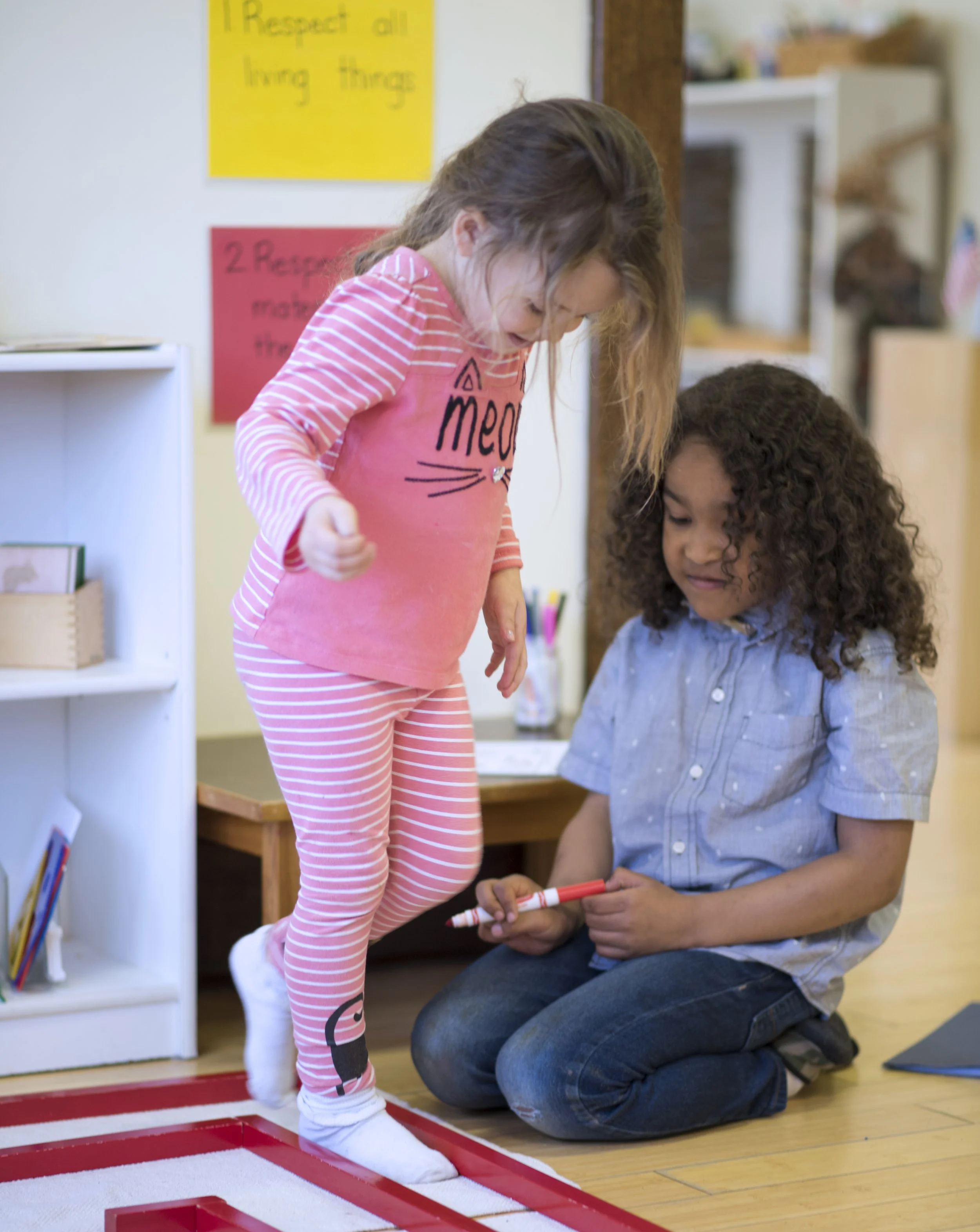
Montessori classes are multi-aged groups spanning three years. This allows for social development, children helping children and shared learning as well as independent growth. Because of the different ages and abilities, teaching one another becomes a reality. This leads to an atmosphere of respect, generosity, and cooperation that children find satisfying. Children are free to move purposefully around the classroom. They are free to talk to and work with other children. The Montessori works are purposeful and educationally relevant. Everything in a Montessori learning environment is child-centered. The focus of the activity is on the children learning, not on the teacher teaching.
-

The Three-Year Cycle
In order to reap the fullest benefits of a Montessori classroom, one must understand the importance of the three-year cycle. The primary classroom (3-6 year old) was developed with the mindset that the children would join Montessori at 3 years old and then stay for three years, thus completing the cycle. This idea coincides with the data that Maria Montessori discovered pertaining to the Planes of Development. It is of the utmost importance that when you enroll your child at 3 years old, you understand that for your child to reach their full potential, they will be expected to stay at Northside for 3 years.
-

Deliver with Confidence
The role of the Montessori teacher in the classroom is fewer directives than is customary in the traditional classroom. The classroom is designed for the needs of the children. The teacher's role is to be a guide, observer, and caretaker of the environment. The teacher carefully prepares the classroom by providing a stimulating environment and by removing obstacles to learning. The teacher will present a lesson to a child or small group of children and then step back to allow them to pursue the work independently. The teacher will observe the child, help them overcome difficulties, and redirect the child when necessary.
Hints for Parents
Trust your eyes, ears, and gut instincts. Trust your child's feelings. There is nothing that can replace personal observation. The school that one family raves about may be completely wrong for another child. In addition, one parent may decide that "Montessori doesn't work," when it clearly works for others. Be sure to ask all your questions, and rely on your own experience.
Additional Resources
American Montessori Society
United Montessori Schools of Indiana
International Montessori Council
Northside Montessori Facebook Page
Blogs:
https://www.thekavanaughreport.com/p/shelf-help-podcast_23.html
Podcast:
https://themontessorinotebook.com/the-montessori-notebook-podcast
Books:
Montessori - The Science Behind the Geniusby Dr. Angeline Stoll Lillard
Montessori Today by Paula Polk Lillard
Montessori Madness: A Parent to Parent Argument for Montessori Education by Trevor Eissler
Absorbent Mindby Maria Montessori
Articles:
Corporate Kindergarten: How a Montessori Mindset Can Transform Your Business
How Parents Can Avoid Accidentally Robbing Kids Of Their Confidence